
Archives
Categories
Revision Joint Replacement
Specialised surgical treatment to replace, repair, or revise a previously implanted artificial joint that has developed complications or stopped functioning properly.

What is Revision Joint Replacement?
Revision Joint Replacement is a specialised orthopaedic procedure performed when a previous joint replacement becomes painful, loose, worn out, unstable, infected, damaged, or otherwise fails to function as expected.
Unlike a primary joint replacement, revision surgery can be more complex because the surgeon may need to remove the existing implant, address bone loss or damaged tissues, and carefully place new components to restore joint stability and function.
Revision surgery may be required after a hip replacement, knee replacement, shoulder replacement, or other joint replacement, depending on the individual patient’s condition and previous surgery.
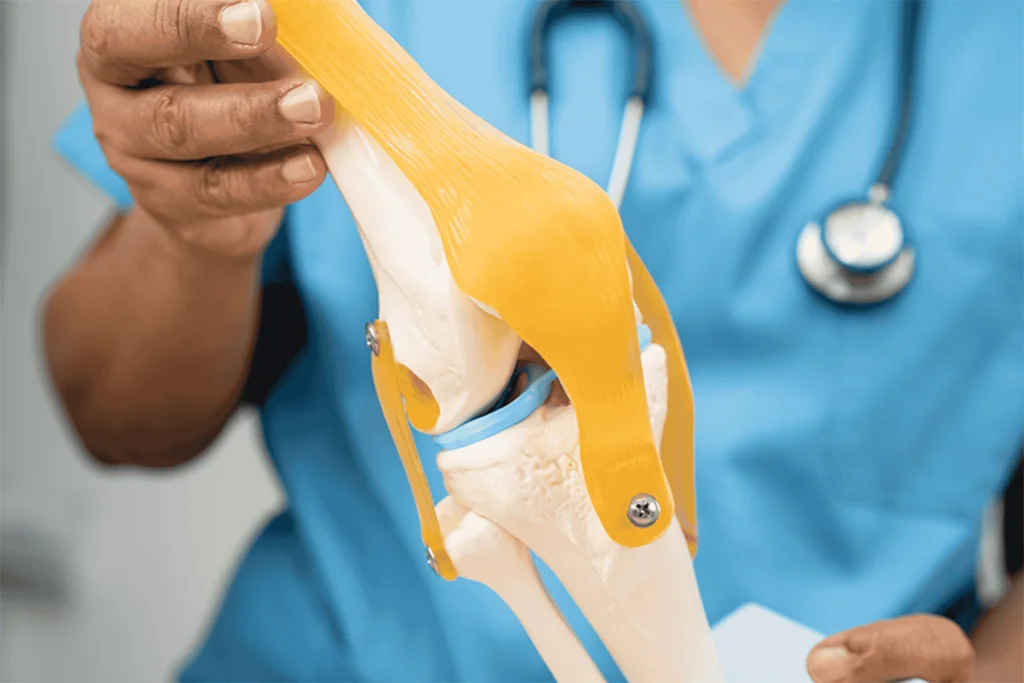
Why is Revision Joint Replacement Needed?
A joint replacement may require revision due to several factors, including:
- Implant loosening – The artificial joint components may become loose over time.
- Implant wear and tear – Components can gradually wear down after years of use.
- Joint instability – The replaced joint may become unstable or repeatedly dislocate.
- Infection – Infection around the artificial joint may require specialised treatment.
- Periprosthetic fracture – A fracture may occur around the implanted joint.
- Implant failure or damage – Components may become damaged or fail mechanically.
- Bone loss – Bone surrounding the implant may weaken or deteriorate.
- Persistent or recurrent pain – Ongoing pain after joint replacement may require further evaluation.
Common Symptoms That May Indicate a Problem
Patients with a failed or problematic joint replacement may experience:
- Persistent or increasing joint pain
- Difficulty walking or performing daily activities
- Joint instability or a feeling of giving way
- Recurrent dislocation
- Swelling or stiffness
- Reduced range of motion
- Difficulty putting weight on the affected limb
- Clicking or unusual sensations around the joint
- Fever, redness, or wound drainage when infection is present
Persistent symptoms after joint replacement should be evaluated by an orthopaedic specialist.

How is Revision Joint Replacement Diagnosed?
A detailed evaluation is performed before deciding whether revision surgery is appropriate.
- Clinical Examination: – The surgeon assesses pain, joint stability, movement, strength, walking pattern, and overall function.
- X-rays :- X-rays help evaluate implant position, loosening, wear, fractures, and changes in the surrounding bone.
- Blood Tests:- Blood tests may be recommended when an infection is suspected.
- Joint Aspiration:- In selected cases, fluid may be taken from around the joint and tested to identify possible infection.
- CT or Other Imaging:- Advanced imaging may be used to assess bone loss, implant positioning, or complex joint problems when required.
Expert Evaluation for Revision Joint Replacement
Facing pain or mobility problems after a previous joint replacement? Consult Dr. Dhruva Angachekar in Mumbai for a detailed assessment and personalised treatment plan based on your joint condition.
How is Revision Joint Replacement Performed?
The exact procedure depends on the type of joint, the condition of the existing implant, bone quality, and the reason for revision.
Generally, the procedure may involve:
- Surgical planning based on previous operation details and imaging.
- Removal of the failed or problematic implant components.
- Treatment of damaged bone or surrounding tissues.
- Management of infection, when present.
- Reconstruction of bone and soft tissues, if required..
- Placement of new revision components designed for the patient’s specific condition.
- Assessment of joint stability and movement.
- Closure and postoperative monitoring.
Revision surgery can be technically more demanding than the original joint replacement and requires careful preoperative planning.
Recovery After Revision Joint Replacement
Recovery varies depending on the joint involved, the complexity of surgery, bone condition, and the patient's overall health.
Postoperative care may include:
- Pain management
- Wound care
- Early mobilisation when appropriate
- Physiotherapy and rehabilitation
- Walking or weight-bearing guidance
- Strengthening exercises
- Regular follow-up appointments
- Monitoring for infection or other complications
A personalised rehabilitation programme helps gradually restore strength, movement, balance, and confidence.
Rehabilitation After Revision Surgery
Physiotherapy plays an important role in recovery. The rehabilitation programme may focus on:
- Improving joint mobility
- Restoring muscle strength
- Improving balance and stability
- Gradually increasing walking ability
- Returning to appropriate daily activities
- Reducing stiffness and functional limitations
The rehabilitation timeline differs from patient to patient, particularly after complex revision procedures.
Benefits and Goals of Revision Joint Replacement
The primary goals of revision surgery may include:
- Relief from persistent joint pain
- Improved joint stability
- Improved mobility and function
- Treatment of implant failure
- Management of infection when appropriate
- Restoration of quality of movement
- Improved ability to perform everyday activities
The expected outcome depends on the underlying problem, bone and soft-tissue condition, complexity of the revision, and individual patient factors.
Who May Need Revision Joint Replacement?
Revision surgery may be considered for patients who have:
- A painful or failed previous joint replacement
- Loosening of an artificial joint
- Significant implant wear
- Recurrent joint dislocation or instability
- Management of infection when appropriate
- Restoration of quality of movement
- Infection around a joint replacement
- A fracture around the artificial joint
- Significant bone loss around the implant
- Mechanical failure or damage of the prosthesis
A detailed orthopaedic assessment is necessary to determine whether revision surgery is appropriate.
Hear From Our Happy Patients
Read genuine patient experiences and feedback about Dr. Dhruva Angachekar’s compassionate care, orthopedic expertise, and commitment to patient recovery.
EXCELLENT Based on 2 reviews
 Posted on Google
 Prabhash SinghDr Dhruva Angachekar recommended for best orthopedic and sports injury surgeon in Mumbai.Posted on Google
 Antesh AnandHighly recommended orthopedic and sports injury surgeon in Mumbai
Frequently Asked Questions
Yes. Revision surgery can be more complex because the surgeon may need to remove existing implants, manage bone loss, address scar tissue, or treat infection.
The longevity of a revised joint varies depending on the type of implant, bone quality, activity level, surgical factors, and individual patient circumstances.
Not every case is the same. The cause of failure, bone condition, infection status, overall health, and previous surgeries are considered before recommending revision surgery.
Recovery varies depending on the joint and complexity of the procedure. Some patients progress steadily over several weeks, while complex revision procedures may require a longer rehabilitation period.
Physiotherapy is commonly an important part of recovery and helps improve mobility, strength, stability, and function.
Book An Appointment

Specialized orthopedic care for joint replacement, sports injuries, arthroscopy, and deformity correction.
OUR TREATMENT
Copyright © 2026 Dr. Dhruva Angachekar. Designed by