
Archives
Categories
Unicompartmental (Partial) Knee Replacement

Preserve Your Natural Knee. Relieve Pain. Restore Mobility.
Unicompartmental Knee Replacement (UKR), also known as Unicondylar Knee Replacement or Partial Knee Replacement, is a surgical procedure designed to treat arthritis affecting only one compartment of the knee.
Unlike total knee replacement, which resurfaces the entire joint, partial knee replacement involves replacing only the damaged compartment while preserving the healthy portions of the knee, including its natural ligaments.
For appropriately selected patients, this procedure can provide significant pain relief, improved mobility, a more natural-feeling knee, and potentially faster recovery compared with total knee replacement.

What Is Unicompartmental Knee Replacement?
The knee is divided into three main compartments:
Medial Compartment: The inner side of the knee.
Lateral Compartment: The outer side of the knee.
Patellofemoral Compartment: The front of the knee, between the kneecap and thighbone.
Arthritis may affect one or several of these compartments. When significant cartilage damage is confined to either the medial or lateral compartment, a unicompartmental knee replacement may be considered.
During the procedure, only the damaged joint surfaces are replaced with specially designed metal and polyethylene components. The healthy cartilage, bone, and supporting ligaments in the remaining compartments are preserved.
The objective is to relieve pain while maintaining as much of the knee’s natural anatomy, movement, and function as possible.
When Is Partial Knee Replacement Recommended?
Not every patient with knee arthritis requires total knee replacement. Patients with arthritis confined to one compartment may benefit from a partial knee replacement.
The procedure may be considered when a patient has:
- Persistent knee pain localised predominantly to the inner or outer side of the knee.
- Advanced arthritis affecting only one compartment.
- Difficulty walking, climbing stairs, or performing daily activities.
- Knee stiffness and reduced mobility.
- Symptoms that have not improved adequately with non-surgical treatment.
- Sufficiently preserved cartilage in the remaining compartments.
- Adequate ligament stability and correctable knee deformity.
A detailed clinical examination and appropriate imaging are essential to determine whether partial knee replacement is suitable. Patient selection is one of the most important factors influencing the success of unicompartmental knee replacement.
Common Conditions Leading to Partial Knee Replacement
- Medial Compartment Osteoarthritis: The most common indication for unicompartmental knee replacement. Cartilage deterioration predominantly affects the inner portion of the knee, often associated with bow-legged alignment.
Lateral Compartment Osteoarthritis: Arthritis limited to the outer side of the knee, sometimes associated with knock-knee alignment, may be treated with lateral unicompartmental knee replacement.
Post-Traumatic Arthritis: Previous fractures or injuries affecting one compartment can result in localised joint degeneration and persistent symptoms.
Osteonecrosis: Selected patients with localised bone damage or collapse, particularly involving a single femoral condyle, may benefit from partial knee replacement when the remaining joint is adequately preserved.
What Are the Advantages of Partial Knee Replacement?
For appropriately selected patients, partial knee replacement offers several potential advantages over total knee replacement.
Preservation of Natural Knee Structures: Healthy cartilage, bone, and major supporting ligaments are retained.
More Natural Knee Movement: Preservation of native knee anatomy and ligaments may allow more natural joint mechanics and a greater sense of normal knee function.
Smaller Surgical Exposure: The procedure generally involves less extensive surgery and bone removal.
Faster Initial Recovery: Many patients experience less postoperative pain and regain mobility sooner than after total knee replacement.
Reduced Blood Loss: The less extensive procedure may result in lower blood loss.
Improved Range of Motion: Some patients achieve better postoperative knee movement compared with total knee replacement.
Preservation of Future Options: If arthritis progresses or the implant develops problems, revision surgery or conversion to total knee replacement may be possible.
However, partial knee replacement is not suitable for everyone. It may have a higher likelihood of requiring further surgery than total knee replacement over time.
How Is Partial Knee Replacement Different From Total Knee Replacement?
Both procedures aim to relieve pain and improve mobility, but they differ in the amount of joint resurfacing required.
Partial Knee Replacement
- Resurfaces one damaged compartment.
- Preserves more natural bone and cartilage.
- Usually preserves both cruciate ligaments.
- Generally smaller surgical exposure.
- Often faster initial rehabilitation.
- Suitable for selected localised arthritis.
Total Knee Replacement
- Resurfaces the medial and lateral joint surfaces.
- Resurfaces a larger portion of the joint
- Often removes the ACL; PCL preservation varies.
- More extensive surgical exposure.
- Recovery generally takes longer.
- Suitable for more widespread arthritis or joint damage.
Neither procedure is universally superior. The most appropriate option depends on the extent of arthritis, ligament stability, knee alignment, symptoms, and individual clinical requirements.
How Is Unicompartmental Knee Replacement Performed?
Partial knee replacement generally involves the following stages.
- Preoperative Evaluation : Your surgeon evaluates your symptoms, medical history, knee movement, ligament stability, alignment, and imaging findings to determine whether partial knee replacement is appropriate.
- Surgical Planning : The affected compartment is assessed, and the surgical technique, implant design, and alignment objectives are planned. Depending on the case and available facilities, conventional or robotic-assisted techniques may be considered.
- Assessment of the Knee : Joint During surgery, the surgeon confirms the extent of cartilage damage and assesses the remaining compartments and ligaments. If more extensive disease is identified, total knee replacement may be more appropriate, as discussed during preoperative planning.
- Removal of Damaged Joint Surfaces : Only the damaged cartilage and a small amount of underlying bone from the affected compartment are removed, preserving the healthy portions of the knee.
- Implant Placement : Metal components are positioned over the prepared femoral and tibial surfaces, with a specialised polyethylene insert between them to allow smooth joint movement.
- Assessment of Movement and Stability : The surgeon checks implant positioning, knee alignment, ligament balance, stability, and range of motion before completing the procedure.
- Postoperative Care : Following surgery, patients receive appropriate pain management, medical monitoring, early mobilisation, and a personalised rehabilitation programme.
Conventional vs Robotic-Assisted Partial Knee Replacement
Unicompartmental knee replacement can be performed using conventional surgical instruments or robotic-assisted technology.
- Conventional Partial Knee Replacement
Conventional surgery uses established surgical instruments and techniques to prepare the damaged joint surfaces and position the implants.
- Robotic-Assisted Partial Knee Replacement
Robotic-assisted surgery uses computer assisted planning and intraoperative guidance to help the surgeon assess knee anatomy, plan implant positioning, and execute bone preparation with greater precision.
The surgeon remains in control throughout the procedure.
Robotic technology may improve the accuracy and consistency of implant positioning. However, its ability to provide superior long-term clinical outcomes compared with well performed conventional surgery remains an area of ongoing research.
Your surgeon will discuss the suitability, advantages, and limitations of each approach based on your individual knee condition.
What Happens After Partial Knee Replacement?
Recovery after unicompartmental knee replacement is generally faster during the early postoperative period than after total knee replacement, although individual recovery varies.
Most patients are encouraged to stand and begin walking with assistance on the day of surgery or the following day, depending on their medical condition and postoperative progress.
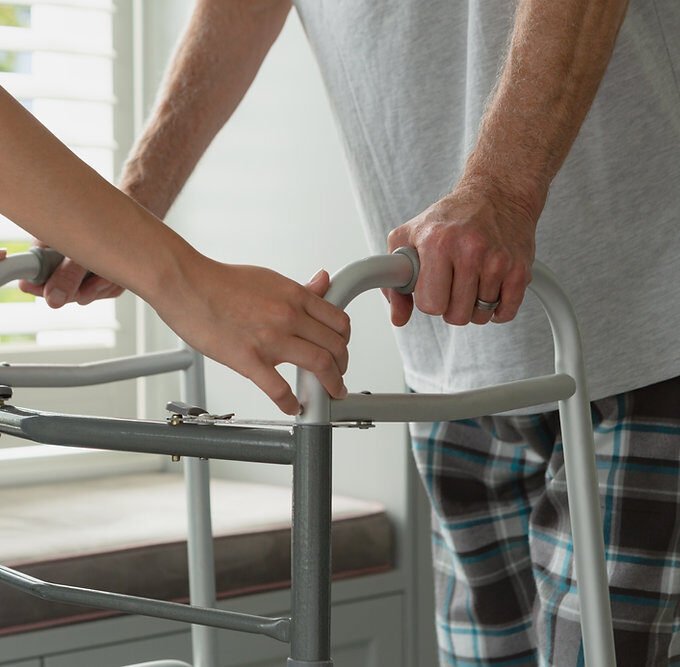
Patients may require a walker or walking stick initially, gradually progressing towards independent walking as strength and confidence improve.
Many patients return to routine activities of daily living within approximately 3–6 weeks, with continued improvements in strength, mobility, and endurance over subsequent months.
Residual swelling and discomfort may persist for several months, and regular rehabilitation remains important for achieving optimal functional recovery.
Experiencing persistent knee pain, stiffness, or difficulty walking?
Dr. Dhruva Utkarsh Angachekar is a fellowship trained Orthopaedic Surgeon in Mumbai with advanced international training in conventional and robotic-assisted knee replacement, joint preservation, osteotomies, and sports injury surgery.
Rehabilitation After Unicompartmental Knee Replacement
A structured rehabilitation programme focuses on restoring knee movement, improving muscle strength, and gradually returning patients to everyday activities.
Phase 1: Early Mobilisation (Day 0–2) Patients are encouraged to begin standing and walking with assistance as soon as medically appropriate. Rehabilitation focuses on pain control, swelling management, gentle knee movement, and safe walking.
Phase 2: Initial Recovery (Weeks 1–2) Exercises focus on improving knee bending and straightening, increasing walking distances, and gradually regaining independence with basic daily activities. Walking aids are used as needed.
Phase 3: Return to Daily Activities (Weeks 3–6) Most patients progressively resume routine household activities, longer walks, and light functional tasks. Walking aids may be discontinued when strength and balance permit. Patients may also begin returning to suitable desk-based work and driving when clinically cleared and able to perform these activities safely.
Phase 4: Strengthening and Functional Recovery (Weeks 6–12) Rehabilitation progresses towards improving muscle strength, balance, endurance, and functional confidence. Patients may gradually resume low-impact exercise, such as walking, stationary cycling, and swimming once their wound has healed and their surgeon approves.
Phase 5: Long-Term Recovery (Months 3–6 and Beyond) Most patients continue to experience improvements in strength, mobility, and overall knee function. Some residual swelling or discomfort may take longer to settle.
Your surgeon and physiotherapy team will guide you through a personalised rehabilitation programme, adjusting activity levels and exercises according to your recovery.
“These timelines are general guidelines. Recovery depends on individual health, surgical factors, and rehabilitation progress.”
Benefits and Expected Outcomes
For appropriately selected patients, unicompartmental knee replacement can provide:
- Significant reduction in arthritis-related knee pain.
- Improved walking ability and functional mobility.
- Better range of knee movement.
- Greater independence in daily activities.
- Preservation of healthy knee structures.
- Potentially faster early recovery than total knee replacement.
- Improved quality of life.
Many patients report that their partially replaced knee feels more natural than a fully replaced knee, although this experience varies.
The aim is to preserve as much of the natural knee as possible while improving comfort, mobility, and function.
Is Partial Knee Replacement Right for Everyone?
Partial knee replacement is suitable only for selected patients. The procedure may not be appropriate when arthritis affects multiple compartments, the knee has significant ligament instability, substantial stiffness, severe fixed deformity, or certain inflammatory joint conditions.
Your surgeon will evaluate:
- The location and severity of arthritis.
- The condition of the remaining joint cartilage.
- Ligament integrity and knee stability.
- Knee alignment and deformity.
- Range of motion.
- Overall medical fitness
- Activity requirements and treatment expectations.
A thorough orthopaedic assessment is essential to determine whether partial knee replacement, total knee replacement, or another treatment is most appropriate.
Are There Any Risks or Limitations?
As with any surgical procedure, unicompartmental knee replacement carries certain risks. These may include infection, blood clots, persistent pain or stiffness, implant loosening or wear, and complications related to anaesthesia. Arthritis may also progress in the compartments that have not been replaced, potentially requiring further surgery in the future.
Although partial knee replacement can provide excellent results in appropriately selected patients, it may have a higher revision rate than total knee replacement.
Your surgeon will discuss the potential benefits, risks, and expected outcomes before surgery.
Alternatives to Partial Knee Replacement
Not all patients with isolated knee arthritis require surgery.
Depending on the severity and cause of symptoms, treatment options may include:
- Physiotherapy and strengthening exercises.
- Activity modification and lifestyle adjustments.
- Weight management where appropriate.
- Pain-relieving medications.
- Selected joint injections.
- Unloading knee braces.
- Walking aids when needed.
- Joint preservation procedures such as high tibial osteotomy in appropriately selected patients.
- Total knee replacement when arthritis is more extensive or partial replacement is unsuitable.
The choice of treatment is based on your symptoms, clinical examination, imaging findings, and individual functional goals.
Hear From Our Happy Patients
Read genuine patient experiences and feedback about Dr. Dhruva Angachekar’s compassionate care, orthopedic expertise, and commitment to patient recovery.
EXCELLENT Based on 2 reviews
 Posted on Google

 Prabhash SinghDr Dhruva Angachekar recommended for best orthopedic and sports injury surgeon in Mumbai.Posted on Google
 Antesh AnandHighly recommended orthopedic and sports injury surgeon in Mumbai
Frequently Asked Questions
There is no strict age limit for unicompartmental knee replacement. Both younger and elderly patients may be suitable candidates when arthritis is limited to one compartment and the remaining joint structures are adequately preserved.
Your surgeon will assess your knee condition, overall health, activity requirements, and treatment expectations before recommending surgery.
Neither procedure is better for every patient. Partial knee replacement preserves more natural knee structures and may offer faster initial recovery, but it is suitable only when arthritis is sufficiently localised.
Total knee replacement may be more appropriate when arthritis affects multiple compartments or the knee has significant deformity or instability.
Your surgeon will discuss both options and recommend the most suitable procedure for your condition.
Modern partial knee replacements can provide long-lasting pain relief and improved function, with many implants functioning well for more than 10–15 years.
However, implant longevity varies depending on factors such as patient selection, implant design, surgical technique, activity level, and progression of arthritis in the remaining knee.
Some patients may require revision surgery or conversion to total knee replacement in the future.
Most patients begin walking with assistance shortly after surgery and gradually progress towards independent walking.
Many resume routine daily activities within approximately 3–6 weeks, while improvements in muscle strength and functional confidence continue over the following months.
Recovery varies between patients, and your surgeon will guide your rehabilitation accordingly.
Many patients can return to recreational activities and low-impact sports such as walking, cycling, swimming, and golf following adequate rehabilitation.
Higher-impact activities and competitive sports require individual assessment because they may place greater stress on the implant.
Your surgeon will advise you regarding suitable activities based on your recovery, strength, and functional goals.
Yes. If arthritis progresses in the remaining compartments or the implant develops complications, conversion to total knee replacement may be possible.
However, revision surgery can be more complex than a primary knee replacement, and the decision depends on the condition of the knee, remaining bone, and existing implants.
The decision depends on the extent of arthritis, location of pain, ligament stability, knee alignment, and overall joint condition.
Your surgeon will perform a detailed clinical examination and review appropriate investigations, including X-rays and additional imaging when necessary.
The most suitable procedure is determined by your individual knee condition rather than age or imaging findings alone.
Book An Appointment

Specialized orthopedic care for joint replacement, sports injuries, arthroscopy, and deformity correction and complex orthopaedic trauma.
OUR TREATMENT
Copyright © 2026 Dr. Dhruva Angachekar. Designed by