
Archives
Categories
Total Hip Replacement

Relieve Hip Pain. Restore Mobility. Move with Greater Confidence
Total Hip Replacement, also known as Total Hip Arthroplasty, is a surgical procedure used to treat severe damage or degeneration of the hip joint. During the procedure, damaged portions of the hip joint are replaced with artificial components to help reduce pain and improve hip function.
For patients experiencing persistent hip pain, stiffness, or difficulty performing everyday activities due to advanced joint damage, hip replacement may be considered after a comprehensive orthopaedic evaluation.
What Is Total Hip Replacement?
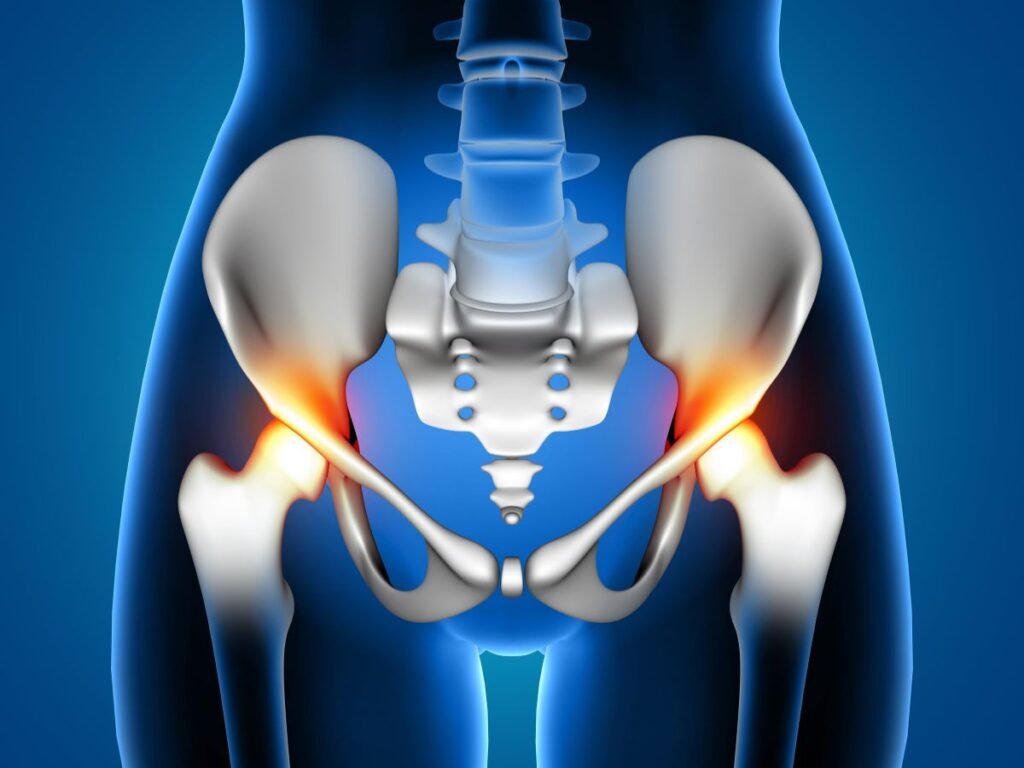
The hip is a ball-and-socket joint that connects the thigh bone to the pelvis. The rounded head of the femur fits into a socket in the pelvis and is normally covered by smooth cartilage, allowing the joint to move freely.
When the cartilage and other structures of the hip become severely damaged, movement can become painful and restricted. Conditions such as advanced osteoarthritis, rheumatoid arthritis, certain fractures, or other forms of joint degeneration can affect hip function.
During total hip replacement, the damaged parts of the hip joint are replaced with artificial components. The procedure aims to reduce pain and improve the function of the hip.
When Is Total Hip Replacement Recommended?
Hip replacement is not required for every person with hip pain. It may be considered when symptoms are significant and other appropriate treatment options have not provided adequate relief.
A doctor may consider hip replacement when a patient experiences:
- Persistent or severe hip pain
- Advanced hip osteoarthritis
- Significant joint degeneration
- Difficulty walking
- Difficulty climbing stairs
- Pain during everyday activities
- Hip stiffness and restricted movement
- Difficulty putting on shoes or socks
- Pain that interferes with sleep
- Reduced ability to perform routine activities
- Persistent symptoms despite non-surgical treatment
A detailed orthopaedic assessment is required before deciding whether surgery is appropriate.
Conditions That May Lead to Hip Replacement
- Hip Osteoarthritis : Osteoarthritis can gradually damage the cartilage within the hip joint, leading to pain, stiffness, and reduced mobility.
- Rheumatoid Arthritis : Inflammatory arthritis can affect the hip joint and may result in progressive damage and functional limitations.
- Hip Fractures : Certain serious fractures involving the hip may require surgical treatment, including replacement in selected cases.
- Avascular Necrosis : Avascular necrosis can damage the femoral head by affecting its blood supply and may eventually lead to joint collapse and arthritis.
- Severe Hip Joint Degeneration : Advanced degeneration of the hip joint may cause persistent pain and significant limitations in everyday activities.
Symptoms of Severe Hip Joint Problems
Patients with advanced hip conditions may experience:
- Hip or groin pain
- Pain extending toward the thigh or knee
- Difficulty walking
- Hip stiffness
- Reduced range of movement
- Difficulty standing for long periods
- Difficulty climbing stairs
- Difficulty getting up from a chair
- Difficulty putting on footwear
- Pain during routine activities
- Reduced physical activity
Persistent symptoms should be evaluated by an orthopaedic specialist to determine their underlying cause.
How Is Total Hip Replacement Performed?
Total hip replacement involves replacing the damaged components of the hip joint with artificial components.
- Pre-Surgical Evaluation : The patient’s symptoms, medical history, physical condition, hip movement, and diagnostic imaging are assessed.
- Treatment Planning : The surgeon evaluates the extent of joint damage and discusses appropriate treatment options and surgical considerations.
- Accessing the Hip Joint : During surgery, the surgeon accesses the damaged hip joint using an appropriate surgical approach.
- Removal of the Damaged Femoral Head : The damaged femoral head is removed as part of the replacement procedure.
- Preparation of the Hip Socket : The damaged surface of the acetabulum is prepared to receive the artificial socket component.
- Placement of Artificial Components : The replacement components are positioned to recreate the function of the natural hip joint.
- Assessment of Movement and Stability : The hip is assessed during surgery to ensure appropriate movement and stability.
- Post-Operative Care : Following surgery, the patient receives appropriate monitoring, pain management, mobility guidance, and rehabilitation instructions.
Following surgery, the patient receives appropriate monitoring, pain management, mobility guidance, and rehabilitation instructions.
What Happens After Total Hip Replacement?
Recovery is an important part of hip replacement treatment.
Patients are generally encouraged to begin appropriate movement as advised by their medical and rehabilitation team. The recovery programme may include:
- Assisted walking
- Physiotherapy
- Hip-strengthening exercises
- Mobility exercises
- Balance and functional training
- Gradual return to everyday activities
Recovery varies from person to person depending on age, general health, muscle strength, underlying medical conditions, and adherence to rehabilitation.

Expert Total Hip Replacement Care in Mumbai
Experiencing persistent hip pain, stiffness, or difficulty walking? Consult Dr. Dhruva Angachekar, an experienced orthopaedic surgeon in Mumbai, for a detailed evaluation and personalised guidance on total hip replacement and other suitable treatment options.
Rehabilitation After Hip Replacement
A structured rehabilitation programme can help patients progressively regain strength and mobility.
- Early Mobility : Patients may be encouraged to begin appropriate movement under professional guidance.
- Walking Rehabilitation : Walking may initially require assistance, with progression based on individual recovery.
- Muscle Strengthening : Exercises may be recommended to strengthen muscles around the hip and lower limb.
- Range-of-Motion Exercises : Appropriate exercises can help restore movement according to the treating team’s recommendations.
- Functional Recovery : Patients gradually work towards resuming everyday activities safely.
Benefits of Total Hip Replacement
For appropriately selected patients, total hip replacement can help with:
- Reduction in hip pain
- Improved mobility
- Improved ability to perform everyday activities
- Improved hip function
- Greater independence
- Improved quality of life
Individual results vary, and recovery depends on several patient-specific factors.
Is Total Hip Replacement Right for Everyone?
No. The presence of hip pain alone does not necessarily mean that hip replacement is required.
The decision may take into consideration:
- Severity of joint damage
- Intensity and duration of symptoms
- Impact on daily activities
- Physical examination
- Imaging findings
- Response to non-surgical treatment
- Overall health
- Activity requirements
- Patient expectations
An orthopaedic consultation can help determine the most appropriate treatment approach.
Alternatives to Hip Replacement
Depending on the underlying condition and severity of symptoms, non-surgical treatment may include:
- Activity modification
- Physiotherapy
- Strengthening exercises
- Weight management where appropriate
- Pain-management strategies
- Walking or mobility aids
- Other treatments recommended by the treating doctor
The appropriate treatment depends on the individual’s diagnosis and clinical condition.
Hear From Our Happy Patients
Read genuine patient experiences and feedback about Dr. Dhruva Angachekar’s compassionate care, orthopedic expertise, and commitment to patient recovery.
EXCELLENT Based on 2 reviews
 Posted on Google
 Prabhash SinghDr Dhruva Angachekar recommended for best orthopedic and sports injury surgeon in Mumbai.Posted on Google
 Antesh AnandHighly recommended orthopedic and sports injury surgeon in Mumbai
Frequently Asked Questions
Total hip replacement is a surgical procedure in which damaged parts of the hip joint are replaced with artificial components to improve joint function and reduce pain.
It may be considered when significant hip pain and functional limitations persist despite appropriate non-surgical treatment and there is substantial joint damage.
Yes. Total hip replacement is a major orthopaedic surgical procedure that requires pre-operative assessment and post-operative rehabilitation.
Recovery varies between individuals. Mobility generally improves progressively with rehabilitation, but the overall recovery period depends on the patient's health, strength, condition, and adherence to rehabilitation.
Rehabilitation is commonly an important part of recovery. Your treating team can recommend
an appropriate physiotherapy and exercise programme.
Book An Appointment

Specialized orthopedic care for joint replacement, sports injuries, arthroscopy, and deformity correction.
OUR TREATMENT
Copyright © 2026 Dr. Dhruva Angachekar. Designed by